Venue · Rio de Janeiro
Estádio da Gávea
Nothing listed right now
About Estádio da Gávea
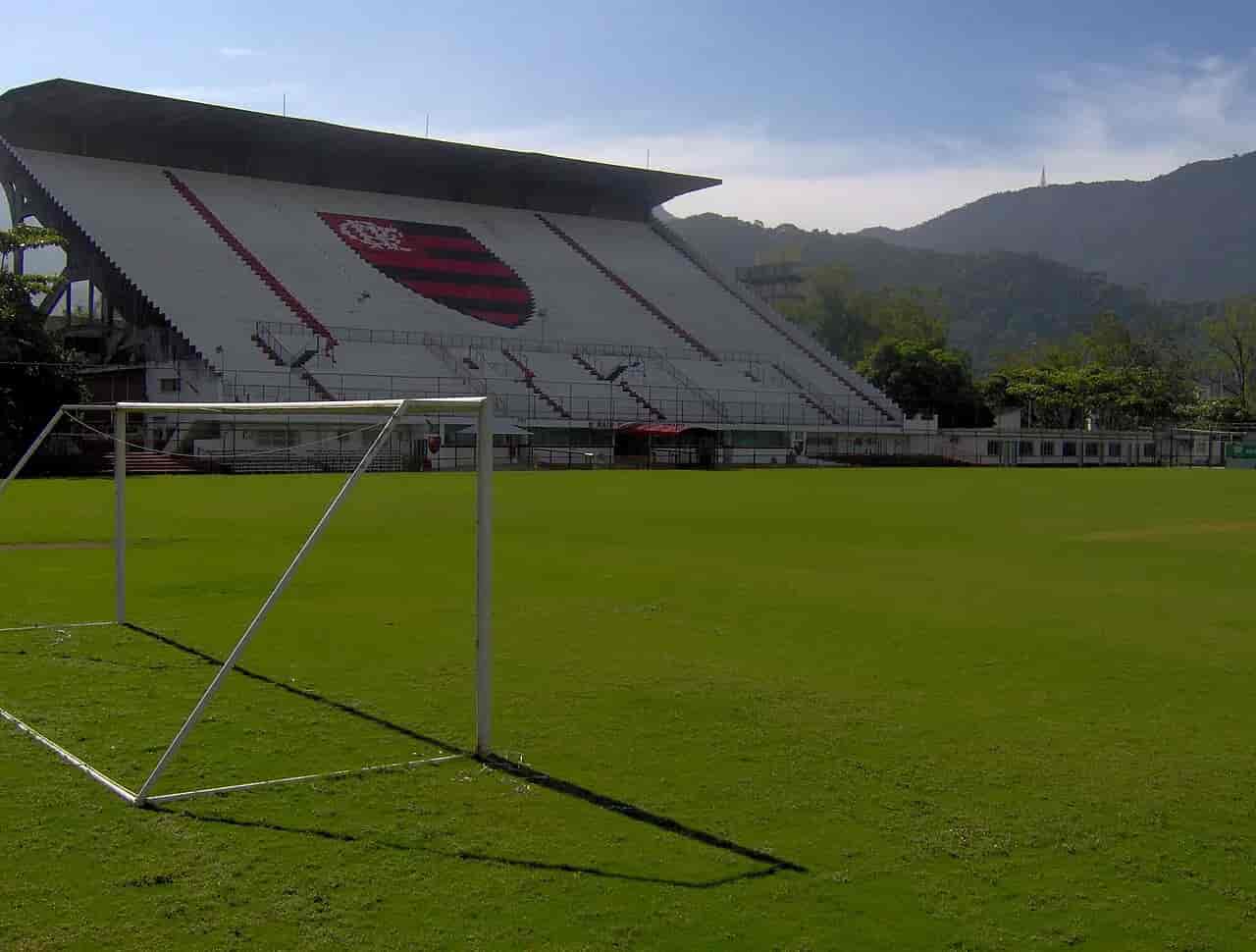
The Estádio da Gávea, also known as Estádio José Bastos Padilha, is a football stadium, inaugurated on September 4, 1938, in the Lagoa neighborhood, of Rio de Janeiro, Brazil. It has a maximum capacity of 4,000 spectators, and is the home ground of Flamengo, its owner. Flamengo rarely plays at Estádio da Gávea. The club's most used stadium is Maracanã.
Getting there
🚉 Public transport
- Estação Antero de QuentalMetro station800 m · 13 min walk
- Estação Jardim de Alah / LeblonMetro station820 m · 13 min walk
- Estação GáveaMetro station1.1 km · 17 min walk
Distances are measured in a straight line from the venue; walking times are estimates. Wikidata (CC0)
🛏️ Hotels near Estádio da Gávea
Check prices ↗- I'm Hostel - Be happyHotel740 m · 12 min walk
- Hostel LeblonHotel750 m · 12 min walk
- Brazilodge LeblonHotel920 m · 15 min walk
- Promenade Palladium LeblonHotel940 m · 15 min walk
- Marina All Suites HotelHotel960 m · 16 min walk
- Che Lagarto Hostel IpanemaHotel1,000 m · 16 min walk
🛏️ Hotels near Estádio da Gávea
Check prices ↗More venues in Rio de Janeiro
- Estádio Jornalista Mário FilhoRio de Janeiro · Stadium · Capacity 78,838
- Estádio Nilton SantosRio de Janeiro · Stadium · Capacity 46,931
- MaracanãzinhoRio de Janeiro · Arena · Capacity 11,800
- Estádio Proletário Guilherme da SilveiraRio de Janeiro · Stadium · Capacity 9,564
- Velódromo da BarraRio de Janeiro · Stadium · Capacity 5,000
- Estádio das LaranjeirasRio de Janeiro · Stadium · Capacity 4,300
Other venues in Rio de Janeiro
Estádio da Gávea: FAQs
What's on at Estádio da Gávea?
There are no upcoming events listed at Estádio da Gávea right now.
Where is Estádio da Gávea?
Estádio da Gávea is located at Rio de Janeiro.
How big is Estádio da Gávea?
Estádio da Gávea has a capacity of around 4,000.
What is the nearest station to Estádio da Gávea?
The nearest station is Estação Antero de Quental (Metro station), about 800 m from Estádio da Gávea.
Which hotels are closest to Estádio da Gávea?
The closest places to stay are I'm Hostel - Be happy (740 m), Hostel Leblon (750 m), and Brazilodge Leblon (920 m).
When did Estádio da Gávea open?
Estádio da Gávea opened in 1938.
Which teams or companies are based at Estádio da Gávea?
Estádio da Gávea is the home of Clube de Regatas do Flamengo.